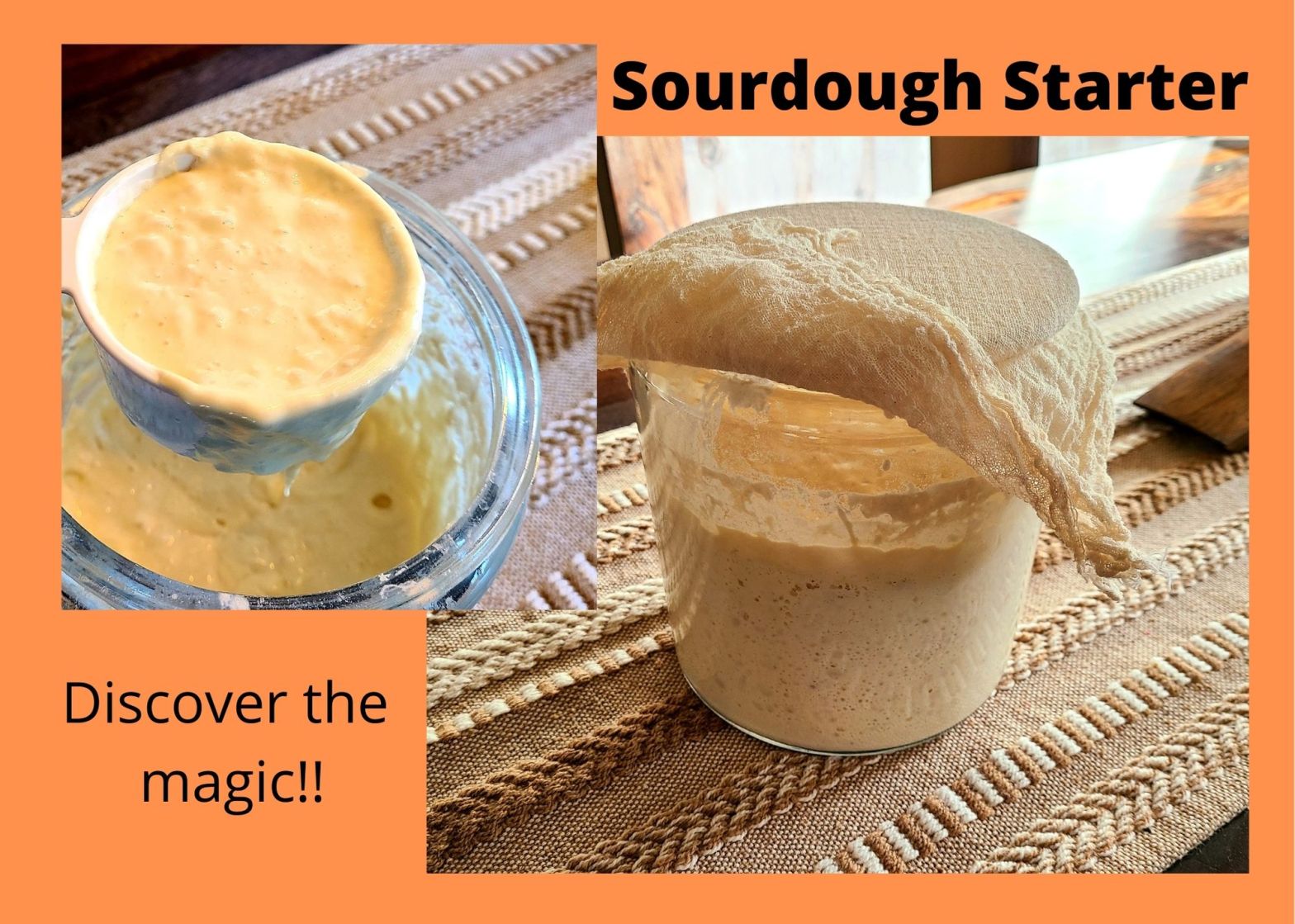
I grew up with sourdough being a staple part of our diet. I have been so familiar with it throughout my life that it’s almost foreign to think that others aren’t privy to the magical properties of sourdough.
- Sourdough is loaded with super healthy probiotics due to the ferment process.
- Sourdough produces a natural yeast that eliminates the need for active dry yeast.
- Sourdough produces a unique, tangy taste to foods.
- Sourdough is easy to start and maintain.
- Sourdough teaches patience.
The sourdough I grew up with was a 150 year old sourdough starter that had been in my gramps family for generations. Yes, you read that right…150 years! One of the magical things about sourdough is that it can be kept for generations. And because it creates natural yeast, it’s often a favorite amongst homesteaders. But you don’t need to be a homesteader to use sourdough.
If you’re thinking “I’ve had sourdough bread from the store and I don’t like it”, I challenge you to try true sourdough. Store bakeries often put vinegar or some other sort of fermenting liquid into breads they call sourdough. This is not true sourdough. And while sourdough does add a unique and tangy taste to foods, it isn’t the kind of tang you might be used to in store bought sourdough goods.
I’ve started several sourdough starters throughout my days, including one recently that has by far been the best sourdough starter I’ve had to date. It has a significant sour smell and flavor to it, something I love about sourdough. It is incredibly active, clearly loaded with natural yeast and healthy probiotics that naturally boost your immune system and help your body function well.
If you’re interested in making your own sourdough starter, here’s how to do it…
Begin with a large glass or plastic jar with a wide mouth. Sourdough will react with certain metals and yeast growth will be inhibited, so I recommend staying away from metal altogether. I use a cookie jar size glass jar with an opening almost as wide as the jar. This makes it easier when taking out discard and feeding your starter.
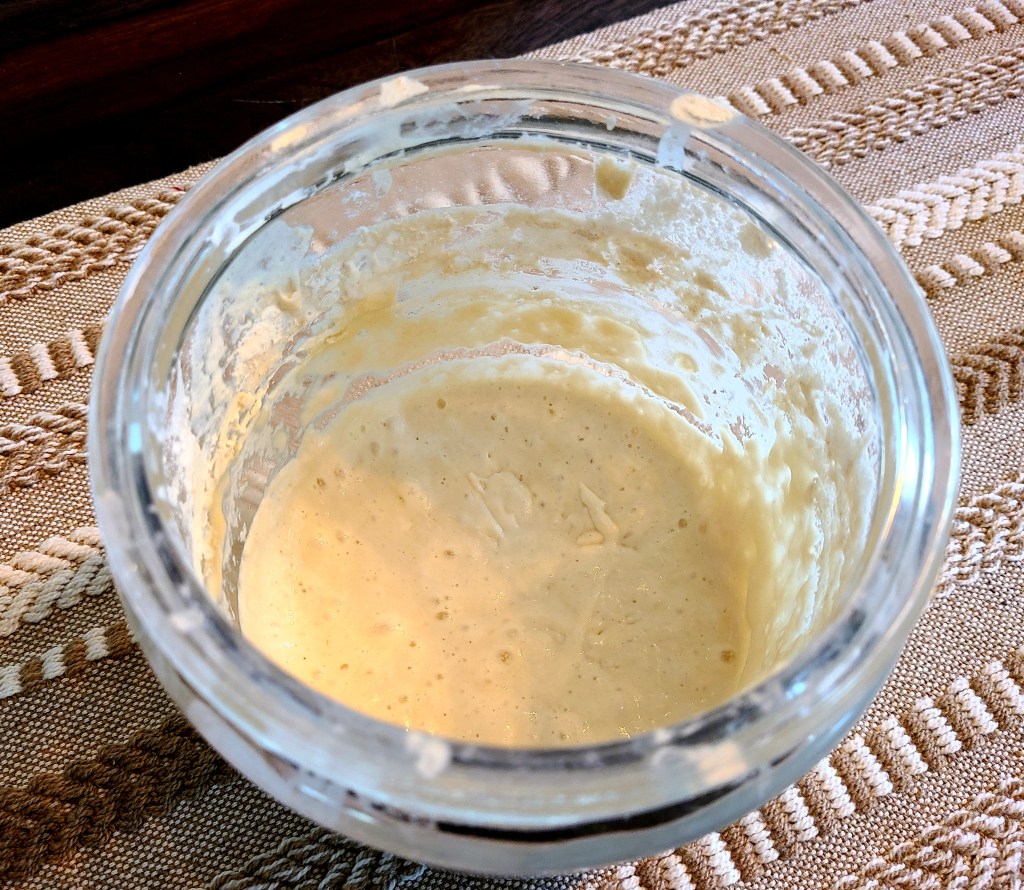
Once you have your jar, wash and rinse it in very hot water to semi-sterilize it. Dry the outside, but not the inside. This will prevent contamination of potential bacterial from the towel inside the jar. To the jar, add 1/2 cup whole wheat flour, 1/2 cup unbleached all purpose flour and 1 cup filtered or well water. We have natural spring water from our well. If you have city water, I highly suggest using filtered water to prevent metals, chlorine and other contaminates from inhibiting your sourdough starter. You can use city water as well, but your sourdough may not be as active and you encounter more difficulty in maintaining your starter.
Stir the mixture well, using a plastic or wood utensil (remember, no metal!), cover it with a paper towel, towel or cheese cloth and secure it with a rubber band. The key to starting a healthy, active starter is using quality flour, uncontaminated water and allowing the mixture to breath. Oh, and this is where patience comes in. Sourdough takes roughly 7-10 days to mature and become active enough to make bread.
On day 2, stir in 1/2 cup whole wheat flour, 1/2 cup unbleached all purpose flour and 1 cup room temperature water. Stir, cover with a cloth and let sit to ferment.
On day 3, use a plastic or glass measuring spoon or cup to remove 1 cup of the mixture, then add 1/2 cup wheat flour, 1/2 cup unbleached all purpose flour and 1 cup room temperature water. Stir, cover with a cloth and let sit to ferment.

On day 4, you should start to see bubbles form on the top of your starter. This is a good sign that the natural yeast in the flour has been activated and is beginning to create more yeast with each feeding. From this point forward, take out 1 cup of starter and add 1 cup unbleached all purpose flour and 1 cup room temperature water. Stir, cover with a cloth and let sit to ferment further.
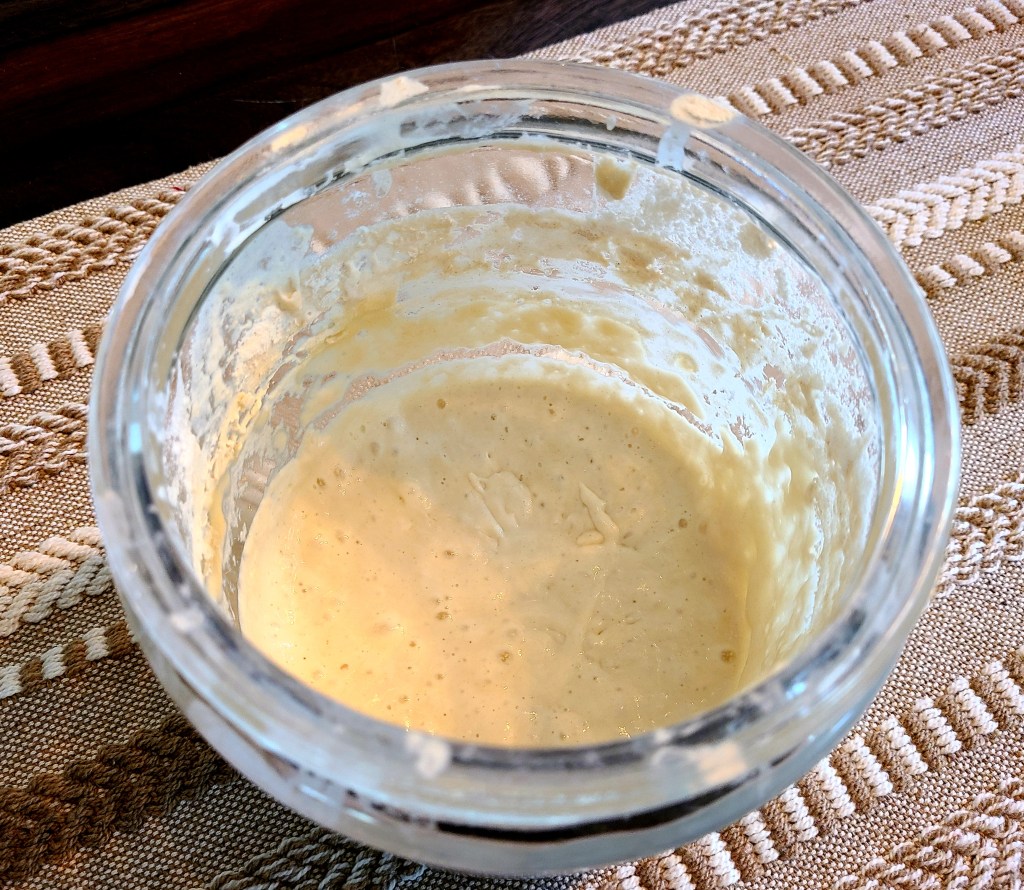
Once you begin to see bubbles form in your sourdough starter, you can begin using your discard (the amount you take out of your starter before you feed it again) to make sourdough discard recipes. If you aren’t ready to make something, you can put the discard in an airtight container in the fridge until you’re ready to use it. Before using refrigerated discard, let the amount you need for your recipe sit on your counter for about an hour to warm up and re-activate. You’ll know it’s activated when bubbles begin to form and the mixture begins to climb, ever so slightly, along the sides of the dish you have it in.
Once you begin seeing your sourdough climb up the sides of your jar, usually around day 7, your sourdough is fully active and likely ready to make bread.
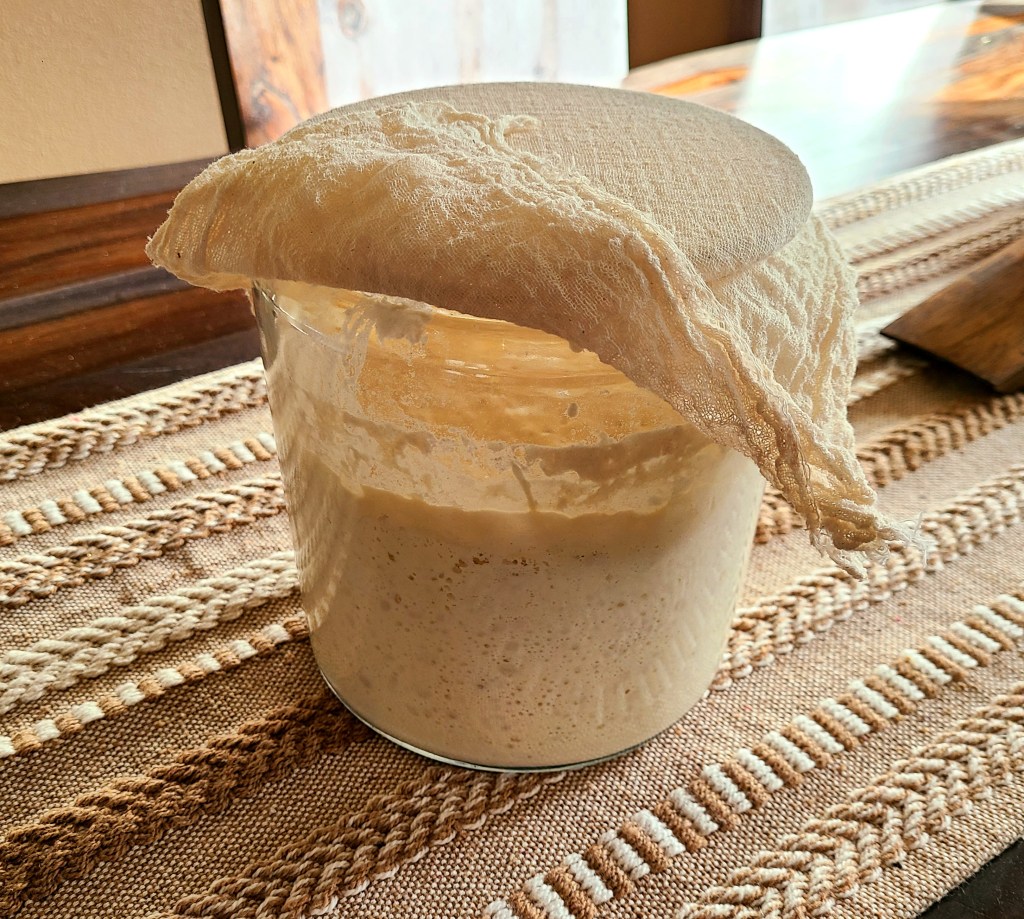
Sourdough can take up to 10 days to fully ferment, so don’t worry if your starter doesn’t begin to climb the sides of your jar on day 7. To find out if your sourdough is ready to make bread, that is able to do the heavy lifting required to raise dough, get a glass of room temperature water, drop a small amount of sourdough starter into the water. If it floats, it’s ready to make bread. If it sinks, it’s not quite ready and you may need to wait another day or two before asking it to do this heavy chore.
And there you have it! An easy way to start your own yeast farm, so to speak. Once you have a sourdough starter, the tasty possibilities are endless.
 Food Crush Cooking Connection