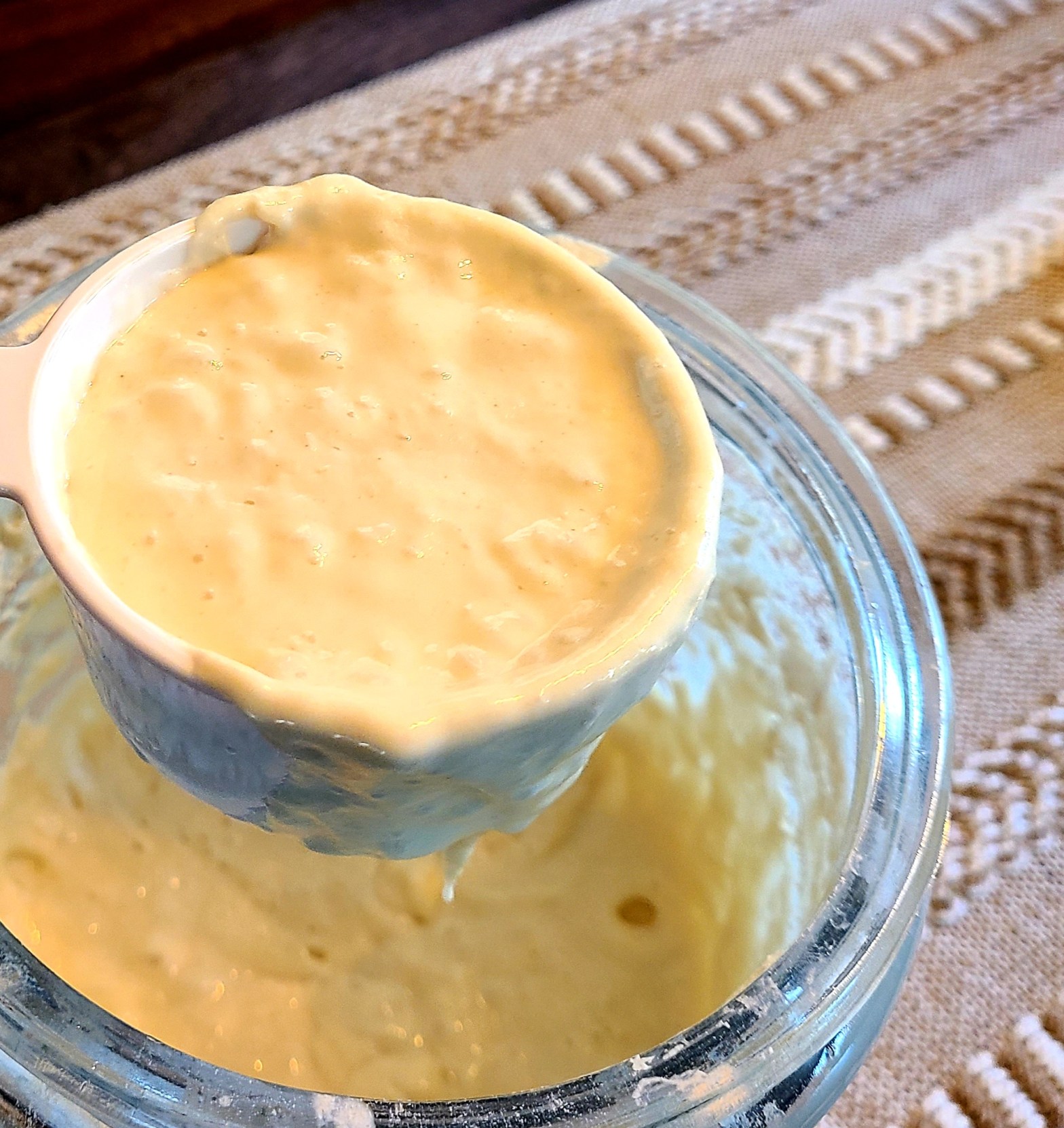
I’ve received a few questions about starting and maintaining a sourdough started, so I thought I’d do a blog to help answer a few questions!
If you’re interested in starting to cook with sourdough but don’t have any sourdough to cook with, see my blog post to learn how to start your own sourdough starter! And if you have questions of your own that I don’t answer in this blog, reach out and let’s chat!
Ok, so let’s get started…
Do I need a sourdough starter to make sourdough bread?
Yes! But you don’t necessarily have to start your own starter.
If you have a friend who has a sourdough starter, as them if you can have a start. After you receive the starter, you can begin baking with it after you have fed it for at least one day – mainly because you need to build up your storage before using it so you have some left.
You can also buy sourdough starter online. If you buy it online, it will generally arrive dried or in packets. If the sourdough is dried, you will need to reconstitute it and then wait for it to mature before you begin baking. If it is in packets, you will need to mix it all together and again, wait for it to mature before you begin baking. Be leery of any sourdough kit or recipe that requires you to add yeast! A sourdough starter naturally makes yeast. You don’t want to start one with yeast that isn’t made naturally. Partially because it may not be naturally formed yeast and because you don’t know how it will interact or react with the yeast your sourdough starter will naturally begin to make. Let nature do it’s work and you’ll be glad for the little bit of patience you had in the process!
Can’t I just ask my local grocery story for some sourdough?
Unfortunately, most grocery stores don’t use a sourdough starter to make their sourdough bread.
Most stores add vinegar or some other additive to give their sourdough bread that tangy taste. This is not the same as using sourdough starter. In fact, most sourdough bread bought at the grocery store tastes very different from bread made with real sourdough starter. Many people who say they don’t like sourdough, meaning they don’t like sourdough bread they’ve gotten from the grocery store, love sourdough bread made with sourdough starter. My husband is a prime example! The first time I whipped out my sourdough to make bread, he asked what it was and instantly said “oh, I don’t like sourdough bread”. I asked him to try some real sourdough bread, made with real sourdough starter. Now when I make bread, he’ll ask if it’s sourdough bread and get a big smile on his face when I say “yes”.
The other reminder about sourdough is that it is packed with wholesome goodness, a product of the fermenting process. This is something that can’t be achieved by merely adding vinegar or some other type of tangy ingredient.
What is sourdough hydration?
Sourdough hydration refers to the ratio of water and flour added to your sourdough when you feed it. When a recipe calls for sourdough starter at 100% hydration, it means that when you feed your sourdough you feed it equal amounts of both water and flour. Many people, including myself, feed their sourdough starter equal amounts of water and flour. This has a few benefits…
It’s makes it easy to adjust recipes. Whether you are converting a non-sourdough recipe to sourdough or altering a sourdough recipe, using a sourdough starter at 100% hydration will make the conversion easy. You simply adjust the amount of liquid and solid ingredients in equal proportions.
For instance, if you are converting a non-sourdough recipe to sourdough, you’ll add the desired amount of sourdough (let’s say 1 cup) and then decrease the amount of liquids by 1/2 cup and the amount of flour by 1/2 cup to account for the 1 cup of sourdough added. But you don’t have to keep a 100% hydration sourdough starter. Some people have a 70% hydration sourdough starter, meaning that if they add 1 cup (128 grams) flour to their starter and roughly 72 grams of water when they feed their sourdough. You can also have a sourdough starter above 100% hydration, meaning you add more water than flour when you feed your sourdough. It’s all about your preference.
A starter kept at 100% or below hydration is thicker and generally produces a more sour, tangy taste to it, while a starter with a hydration level above 100% is usually more on the milder side. This will be true for any baked goods you make with your starter as well. The more sour and tangy your sourdough starter is, the more sour and tangy your baked goods will be. It’s really all about preference. Some people love a good sour, tang to their sourdough baked goods, while others prefer a more mild taste without losing all the healthy benefits of sourdough.
Do I have to throw away my discard when I feed my sourdough?
Heck no! In fact, I recommend keeping any discard you take out. If you can’t use it right away, no problem! Keep it in the fridge in an airtight container and it will keep for several months. I have a container that I put all of my sourdough discard into when I feed my starter. Many times, the container is completely full because I don’t have time to make something every day. But when I do have time, I will often make a couple recipes or even a couple loaves of bread and a batch of crackers or brownies, which will nearly empty my discard container and give room for more to go in.
Sourdough discard can be used for so many things, even for bread! As I mentioned, I don’t always have time to make recipes, including bread, the day I remove the discard. But since we don’t eat store bought bread anymore, I make a couple loaves every weekend to last us through the week. When I’m ready to make bread, I simply take the amount of sourdough needed out of my refrigerated discard container and allow it to sit on the counter to warm for about an hour and then use it just as I would use starter taken directly out of my sourdough starter jar.
The possibilities are endless with your sourdough discard. You can make crackers, cookies, coffee cake, pancakes, brownies (my fav!) and so much more! So don’t throw out your discard. Save it for another day and make something yummy out of it!
I think my sourdough is bad! How can I tell?
Believe it or not, it’s not all that easy to ruin sourdough. Unless of course, you just stop feeding it altogether or you forget to feed it for a few days. If this happens, it’s likely you may have to toss it and start over but not guaranteed! There are two things that most people think are signs that their sourdough has gone bad.
Liquid on top of your starter. This is called ho0ch and believe it or not, there’s nothing wrong with it. Stir it back into your starter (Really!) and feed it. Hooch is a sign that your starter has used up all the food available for it to eat and needs to be fed. If your sourdough goes too long without being fed, it will begin to die, which is why sourdough needs to be fed every day. If you’re feeding your sourdough every day and find you have hooch on top every time, you may need to feed your starter twice a day or perhaps adjust the amount of flour and water you feed your starter. One of the reasons I feed my starter equal amounts of flour and water, rather than providing it more water than flour, is that it provides the food my starter needs until the next feeding. But if you prefer a less sour and tangy sourdough and find your starter has a layer of hooch before each feeding, try feeding it twice a day instead of only once a day.
A strong, vinegary smell. In most cases, this is fine. A good sourdough starter will have a tangy, almost vinegary smell to it. If your starter has a smell almost equal to nail polish or pain thinner, you’ll want to provide it some TLC, usually in the form of feeding it a high ratio of flour and water (100% hydration usually works well for this) a couple times a day for 2-3 days or until it returns to normal.
While it may be challenging, sourdough can go bad and here are some tell tale signs that it has.
Pink liquid on top – this is usually the beginning stage of a sourdough starter gone awry. The next stage is usually mold. If you discover a pink liquid on top of your starter, usually accompanied by a very strong odor of nail polish or paint thinner, try feeding it at 100% hydration or below a couple times a day for a few days and monitor it to see if it bounces back. If it doesn’t bounce back, you may need to toss it and start over. Throw away any discard you get while you nurse your sourdough back to a healthy state.
Mold – if your sourdough starter develops mold, you need to toss it! The good thing is, I’ve never had this happen and I’ve had to rescue many sourdough starters in my day. This is not to say it can’t happen. I’ve heard of it happening to some people and my guess is it is due largely to not feeding it enough, which essentially starves your sourdough. I suppose this can also happen if your sourdough is exposed to a mold and that mold begins to grow in it. This is another reason it is important to keep your sourdough away from other fermented products and foods that can mold.
I need a break from my sourdough starter!
No need to worry, we all need a break at times. Whether you’re going on vacation, have a very busy schedule where you know you aren’t going to be able to remember to feed your starter or you’re just tired of it and want to take a break; giving your sourdough starter a rest is quite easy! Simply transfer it to a container with an airtight lid, put it in the refrigerator and forget about it (in a matter of speaking).
Putting your sourdough starter in the fridge will slow the fermentation process down and will allow you to take a break for an extended amount of time, even up to a year or more. Yep, you read that right! You can take a break from your sourdough for quite a long time and it’ll be ready to jump back to life whenever you’re ready!
When you’re ready to use your sourdough again, simply take it out of the refrigerator, put it in your sourdough jar, cover it with a cheese cloth (or some other non-airtight covering), allow it to sit on the counter for at least one hour, feed it and then resume your normal feeding schedule. Within a few days, your sourdough starter will have bounced back into action and be ready to make whatever your heart desires.
One thing to be aware of is that sourdough that has been in the fridge without having any additional sourdough added to it or being stirred will often develop a layer of black or gray liquid on top. Again, this is hooch and it is not bad. Simply stir it back into your sourdough starter, replace the airtight lid and let it sit until you’re ready to bring it back to life.
You can also freeze sourdough, which will preserve it for years! I actually recommend freezing a few portions of your sourdough starter, especially if it’s a good, active starter, early on after you begin. This will provide you with back-up sourdough should anything go wrong and you have to start all over again. Rather than starting from scratch, you can pull out your sourdough reserve from the freezer, let it thaw out, put it in your sourdough jar and begin feeding it normally!
And, you can dehydrate or dry sourdough. This is also a great way to keep sourdough in case your starter becomes unruly or dies. Simply rehydrate the dried sourdough and begin feeding as normal.
Do you have other questions about sourdough starters that I haven’t answered? Let me know and I’ll do my best to help answer them! And don’t forget to subscribe for more great sourdough tips and recipes, plus a host of other great tips, tricks and yummy recipes!
 Food Crush Cooking Connection